
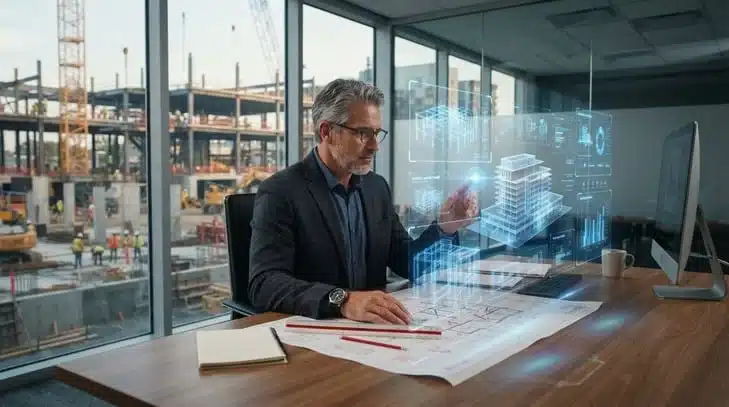
If you’ve spent years building takeoffs and pricing jobs, one question probably keeps coming up: will AI replace construction estimators? It’s a fair concern, and it’s being asked in more break rooms and preconstruction meetings than ever before.
New tools are showing up fast. They promise faster counts, quicker pricing, and fewer late nights before a bid deadline. That kind of speed makes some people nervous about their jobs, and honestly, that’s a reasonable reaction.
So let’s be honest about it. This isn’t hype and it isn’t doom. The goal here is a grounded look at what these tools actually do, what they can’t do, and where the estimator’s role is really headed once the dust settles.

Will AI Replace Construction Estimators? A Direct Answer
No, AI is not going to replace construction estimators. At least not the way many people fear when they first hear about these tools.
What’s actually happening is different. AI is taking over slices of the job, mostly the slow, repetitive parts nobody enjoys anyway. The judgment, the relationships, and the risk calls stay with the person.
Think of it like the shift from hand drafting to CAD. Drafters didn’t vanish. Their tools changed, and the ones who adapted stayed valuable — often more valuable than before.
The same pattern is showing up here. The fear of estimators being replaced by AI comes from watching a tool do one task quickly and assuming that’s the whole job. But a bid is far more than one task, and anyone who’s actually built one knows that.
What AI Actually Does in the Estimating Process Today
Estimating means figuring out what a project will cost before you build it. It covers counting materials, pricing labor, checking plans, and pulling it all into a number you can stand behind when a client pushes back.
AI tools help most with the counting and sorting. For example, they can scan a set of drawings and pull quantities in minutes instead of hours. That work is called a takeoff, which just means measuring how much of each material a job needs.
This is where AI material takeoff has made real progress. A tool can flag doors, windows, or linear feet of pipe and drop them into a list without a person clicking through every sheet by hand. It’s fast, and it cuts down on the tired-eye mistakes that creep in late at night before a deadline.
Some tools also help with historical pricing. They look at what similar jobs cost before and suggest a starting point based on that history. Meanwhile, others help organize bid documents so nothing gets missed in the shuffle.
That’s genuinely useful, and it’s worth saying plainly: this isn’t a gimmick. It’s also a narrow slice of the full job. When people ask whether AI is replacing estimators, they’re often looking at just this one piece and assuming it’s the whole picture — which is exactly where the worry about will AI replace construction estimators tends to come from.
What Estimators Do That AI Still Can’t
Here’s the part that gets missed. A good estimate isn’t just numbers on a page. It’s a set of decisions built on years of experience, most of it earned the hard way.
Take a messy set of plans. The architect’s drawings don’t match the structural sheets. An estimator catches that, calls the right person, and adjusts the number accordingly. A tool can flag a difference, but it can’t pick up the phone and sort out what the client actually wants when the drawings contradict each other.
Then there’s risk. Say a job sits in a flood-prone area with a tight schedule and a client who’s already burned two other contractors. An experienced estimator builds in the right contingency because they’ve been burned before, on a different job, in a different year. That gut sense comes from real jobs, not from data alone.
Relationships matter too. Estimators know which subs are reliable and which ones bid low and change-order you to death six weeks into the project. That knowledge lives in people, not in software, no matter how good the software gets.
There’s also strategy behind every bid. Should you bid aggressively to win the work, or protect your margin because your backlog is already full? That call depends on your crews, your cash position, and your read on the client sitting across the table. No tool makes that decision for you, and that’s exactly why will construction estimators be replaced by AI keeps coming up short as a fear.
Construction Estimator Job Outlook: What the Trends Actually Show
The construction estimator job outlook stays steady, and that surprises some people who assume automation always means fewer jobs. Building isn’t slowing down, and every project still needs someone to price it correctly before ground breaks.
Industry reports generally point to ongoing demand for skilled preconstruction talent. Meanwhile, many firms report a shortage of experienced estimators, not a surplus sitting on the bench. That’s the opposite of a role about to disappear quietly.
Here’s the twist. As tools speed up the routine work, estimators can take on more projects, and more complex ones, without burning out. That tends to make good estimators more valuable, not less, because firms can bid more work with the same headcount.
So the construction estimator job outlook looks less like replacement and more like reshaping. The demand is there, steady as ever. What’s changing is the mix of skills the job actually asks for day to day.
Will Construction Estimators Be Replaced by AI, or Will the Role Change?
The real question isn’t whether the job survives. It’s how it changes shape over the next several years. So will construction estimators be replaced by AI? The honest answer is that the tasks shift, but the role itself holds steady.
Picture two estimators five years from now. One refuses to touch the new tools and spends hours on manual counts every single week, the way it’s always been done. The other lets software handle the counting and spends that freed-up time checking scope, calling subs, and sharpening the bid before it goes out the door.
The second one wins more work with the same hours in the day. That’s simply the direction things are heading, whether anyone likes the pace of it or not.
This ties into the bigger conversation around AI construction estimating and how it’s reshaping preconstruction as a whole, not just one narrow task. The tools are one part of a much larger shift in how bids get built from the ground up.
So no, will construction estimators be replaced by AI isn’t really a yes-or-no question, even though it gets asked that way. It’s about who adapts and who doesn’t. The person who uses the tools well pulls ahead of the person who ignores them out of habit or fear.
How the Estimator’s Day-to-Day Job Is Shifting
The daily grind is already changing for a lot of estimators, even ones who haven’t fully noticed it yet. Less time spent clicking through plans to count items one by one. More time spent thinking about the job as a whole, from scope to risk to schedule.
Consider a typical bid week. In the past, half of it might go to takeoffs alone, leaving little room for anything else. Now a chunk of that time frees up. As a result, an estimator can dig deeper into scope gaps and subcontractor quotes instead of racing the clock on quantities.
That’s a real practical shift, not a theoretical one. This connects to the broader question of can AI improve construction estimating in day-to-day work, not just on paper. In many shops, the answer is showing up as fewer late nights and cleaner, more defensible bids.
Even so, firms still lean on skilled professionals to pull together their bid preparation estimates, because the final number carries real financial risk. A tool can assist with the groundwork. A person still signs off on it and answers for it if something goes wrong.
The job is moving up a level, not down. Less counting, more judgment. Less data entry, more decision-making that actually requires someone who’s been in the field.
What Skills Will Matter Most for Estimators Going Forward
The estimators who thrive will blend old-school knowledge with new tools, not choose one over the other. Field experience still matters more than anything else. Knowing how a wall actually goes together beats any software feature you can name.
Comfort with technology is climbing the list, though, and it’s not optional anymore. You don’t need to be a programmer. You just need to be willing to learn a new tool and check its output with a genuinely critical eye, every time.
That last part is key, maybe the most important point in this whole conversation. AI makes mistakes, and it can miss context a person would catch immediately. An estimator who reviews the numbers instead of trusting them blindly protects the whole firm from an expensive surprise down the road.
Communication is becoming more important too, not less. As routine work shrinks, estimators spend more time talking with clients, subs, and project managers than they used to. Clear conversations close gaps that no tool can see coming.
Finally, judgment about risk stays at the core of the whole job. Reading a job, weighing the unknowns, and pricing them fairly is still the heart of the work. That skill only grows with experience, and no amount of software changes that basic fact.
Frequently Asked Questions
Will AI replace construction estimators completely in the next few years?
No. AI is handling specific tasks like takeoffs and pricing suggestions, not the full role. Judgment, risk calls, and relationships still need an experienced person, and that isn’t likely to change soon.
Will AI replace construction estimators who don’t use the new tools?
The bigger risk isn’t the tool itself. It’s falling behind estimators who use it well and move faster because of it. Learning the technology keeps you competitive and often makes your day genuinely easier.
Are entry-level estimating jobs at risk from AI?
Some routine tasks that juniors once cut their teeth on are getting automated. However, new estimators can still learn the craft by focusing on scope review, risk assessment, and working alongside the tools rather than around them.
Can AI make estimates more accurate?
It can reduce simple counting errors and speed up the process considerably. Accuracy still depends on a skilled person checking the output, filling scope gaps, and making the final judgment calls that actually matter.
The Bottom Line for Estimators
The fear behind the question is understandable, but the reality is calmer than the headlines suggest. AI isn’t erasing the estimator’s job. It’s clearing away the tedious parts and leaving more room for the work that actually needs a human behind it.
The smart move is simple, even if it takes some effort. Get familiar with the tools that fit your work, and keep sharpening the judgment that no software can copy or fake. Try one tool on a real bid. See where it saves you time and where it quietly falls short.
The estimators who pair real experience with these tools will stay in demand for a long time. Building isn’t going away, and neither is the need for someone who can price it right and stand behind the number when it matters. That’s still your job to own, and it will be for a while yet.